security
CCTV installation
A four camera system costs £450 to £1,200 fitted, and the cameras are the cheap part. What separates a system that is useful from one that records nothing identifiable is where the cameras point, how they are lit at night, and whether the recorder is somewhere a burglar cannot reach it.
What this covers
What it costs. Four cameras and a recorder fitted is £450 to £1,200, and eight cameras £900 to £2,000. Full cost breakdown.
What the job covers
- Four and eight camera systems with a recorder
- Camera positions that cover approaches rather than walls
- Remote viewing set up on a phone
- Cabling in Cat6 with power over ethernet
- Upgrading analogue systems to IP cameras
What is involved
A domestic installation is four or eight cameras cabled back to a recorder, usually in Cat6 with power carried over the same cable, so each camera needs one run rather than two. The recorder wants a cupboard, a loft or a fixed position out of sight, because the first thing a recorder is worth to an intruder is the evidence on it. Remote viewing is set up on a phone at the end, and the part that catches people out later is the password, which has to be changed from whatever the box shipped with.
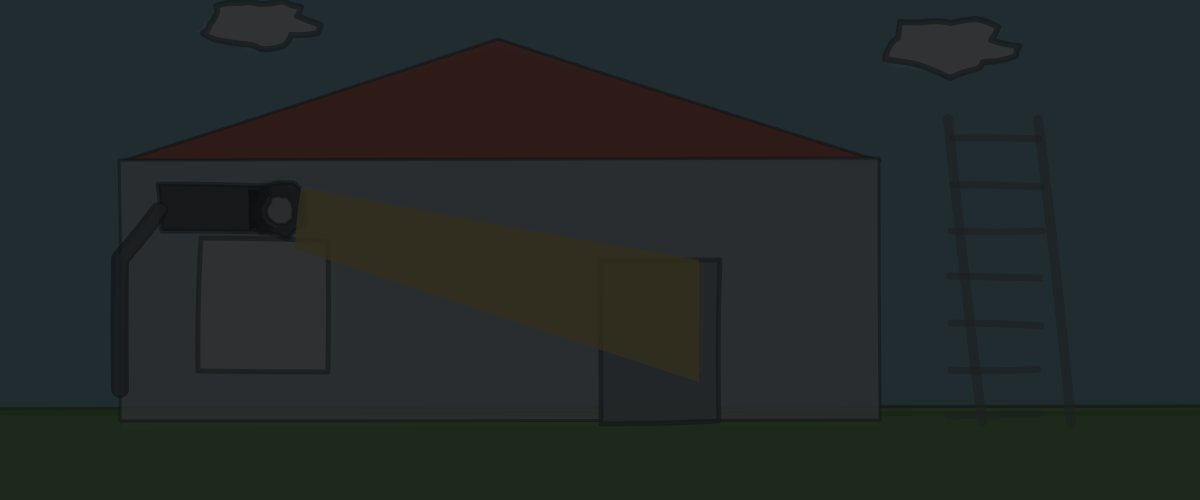
Camera position is the whole job. A camera on a gable end looking down at a drive gives a wide view of the top of somebody's head. A camera at head height covering the approach to a door gives a face. Most useful systems have one camera doing identification at a pinch point and the rest giving context. Night performance follows the same logic: infra red lights the first ten metres well and the next thirty poorly, so a camera aimed at the far end of a garden is recording darkness for nine hours a day.
Domestic CCTV that captures anything beyond the boundary of the property, a pavement, a shared drive, a neighbour's garden, falls under data protection law, and the Information Commissioner's Office publishes guidance for households on exactly that. In practice it means being able to say why each camera points where it does, not keeping footage longer than there is a reason to, and handing over footage if a neighbour asks for their own. A sign is not required for a household and it prevents most arguments.
Choosing someone for the job
Ask what resolution the system records at and what it retains, in days, at that resolution. Ask which single camera is the identification camera and stand where it points. Ask whether the recorder is being hidden. Ask whether the installer changes the default password and hands over the credentials, because a system nobody can log into is somebody else's system.
Common questions
Can I point a camera at my neighbour's property?
Not without a reason you can state. Once footage leaves your own boundary, data protection law applies to you as a householder. Angle the camera to cover your approach rather than their window, and be ready to supply their footage if they ask.
How long is footage kept?
As long as the drive holds, which at four cameras and 4K is usually two to four weeks, longer if the cameras only record on motion. Keeping it longer than you have a reason to is the thing to avoid rather than the thing to aim for.