renewables
Solar PV installation
A 4kW solar array costs £5,500 to £9,500 fitted and generates roughly 3,400 kilowatt hours a year on an unshaded south facing roof. Domestic installations are zero rated for VAT until 31 March 2027 and return to 5% the day after, which is worth more than most of the discounts on offer.
What this covers
What it costs. A 4kW system costs £5,500 to £9,500 fitted and a 6kW system £7,500 to £12,000. Full cost breakdown.
What the job covers
- Roof mounted arrays on tile, slate and flat roofs
- Inverter siting, DC isolation and cable runs
- Generation metering and export notification
- Ground mounted and outbuilding arrays
- Handover documentation for the export tariff
What is involved
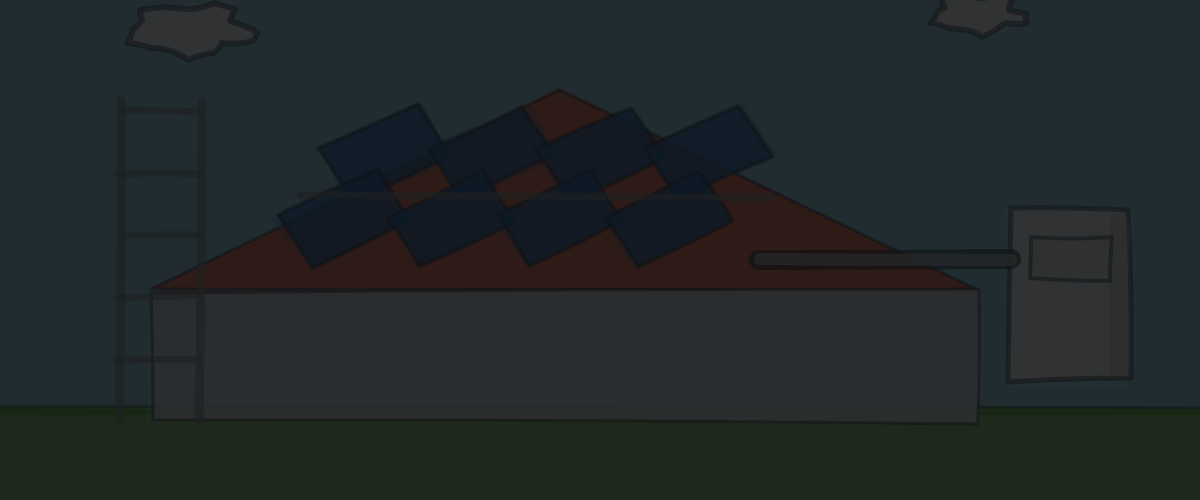
Installation runs to two or three days on a typical house. Scaffolding goes up first, then the mounting rail is bolted through the tiles into the rafters on flashed anchors, the panels clamp to the rail, and the DC cabling is run into the loft to an isolator and the inverter. From the inverter an AC cable runs down to its own way in the consumer unit, usually with a generation meter on the circuit. Roof work and electrical work are the same job here and the same installer signs both off.
MCS certification is what turns an array into an asset the energy market recognises. Without it the installation is legal, safe and invisible: no supplier is obliged to buy the exported units under the Smart Export Guarantee, and that is where a large share of the return lives. The installation also has to be registered with the distribution network operator, under G98 for most domestic systems and under G99 where the inverter capacity is larger or a battery is being added at the same time.
Yield is decided by the roof and not by the panel. Orientation matters most, then pitch, then shading, and shading is the one that punishes a system hardest because a single shaded panel used to drag a whole string down with it. Optimisers and micro inverters exist to stop that and they add cost. An east and west split roof gives roughly 80% of what a south roof gives and spreads the generation across the morning and the evening, which for a household that is out all day is often the more useful shape.
Choosing someone for the job
Ask for the annual kilowatt hour estimate calculated under the MCS methodology rather than a headline figure, and ask what shading factor it assumed. Ask whether scaffolding is in the price. Ask which inverter and what its warranty is, because the inverter is the part that fails first. Ask for the MCS certificate number and check it. A quote without a panel count, a total kilowatt peak figure and an inverter model is not a quote.
Common questions
Do solar panels need planning permission?
Roof mounted panels on a house are normally permitted development in England, Scotland and Wales, provided they do not project more than 200mm from the roof plane and do not sit above the highest part of the roof. Listed buildings and conservation areas are the exceptions and need consent.
Is a north facing roof worth doing?
A true north roof generates around 60% of what the same array makes facing south, and most installers will decline it. North east and north west are borderline. An east and west split is a different proposition and is often worth doing.