wiring
Fuse box and consumer unit replacement
A domestic consumer unit replacement costs £450 to £900 and takes most of a day. It has to be certified everywhere in the UK, and notified as well in England and Wales, so the price has to include testing every existing circuit and the paperwork that follows. A quote that covers only the board and the labour is quoting a different job.
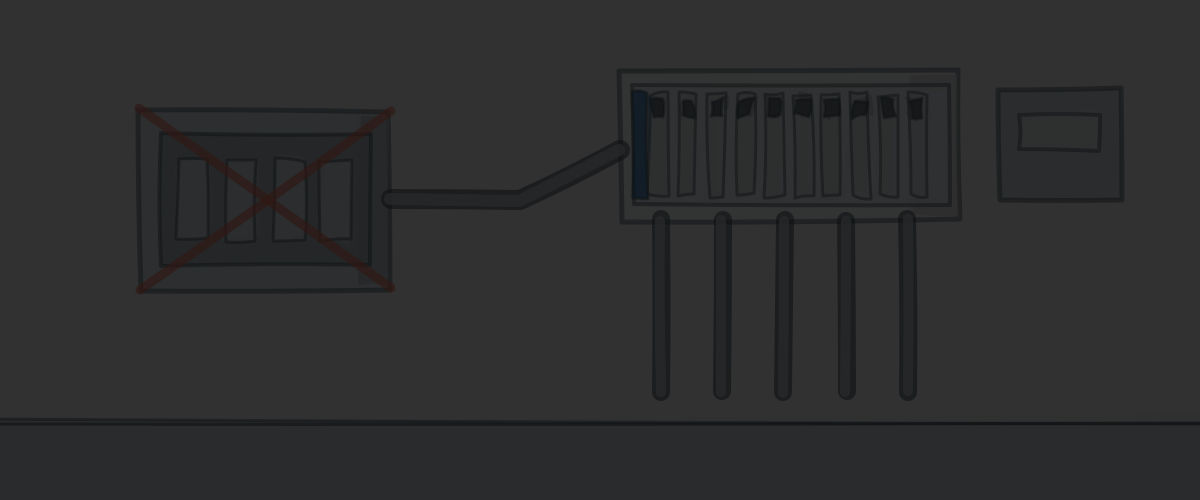
What this covers
What it costs. A domestic board change is £450 to £900 fitted, tested and certified. Full cost breakdown.
What the job covers
- Replacing a rewireable fuse box with an RCBO board
- Upgrading a split load board to individual RCBO protection
- Fitting surge protection at the origin
- Testing and certifying every circuit on changeover
- Correcting bonding found missing during the change
What is involved
The sequence is fixed. Every circuit is identified and recorded, the supply is isolated at the main switch, the old board comes off, and the new one goes on with each circuit landed on its own protective device. Modern practice is an RCBO per circuit rather than two shared residual current devices, which costs a little more and means one fault takes out one circuit instead of half the house. Surge protection at the origin is now the default rather than an upgrade. Then every circuit is tested and the results are written into a certificate that lists them.
The testing is where a straightforward day occasionally stops being one. A board change tests circuits that may never have been tested, and old faults surface: a lighting circuit with no earth, insulation resistance below the limit on a kitchen ring, two circuits sharing a neutral somewhere under a floor. None of that was caused by the work and all of it has to be dealt with before the electrician can sign the installation off, because the certificate covers the whole installation and not only the new metalwork.
Since January 2016 a consumer unit in a domestic property has had to be in a non combustible enclosure, which in practice means steel. A plastic board installed before that date is not illegal and does not have to be replaced, and it is often a sign of an installation old enough to be worth looking at for other reasons. A board with rewireable fuse carriers and no residual current protection is the case that makes itself.
Choosing someone for the job
Ask what happens if a circuit fails its tests on the day, and get the hourly rate for remedials in writing before work starts. Ask whether the price is for individual RCBOs or a split load board. Ask whether surge protection is included. Ask for the certificate and the scheme notification, and expect the building control certificate to arrive by post within a few weeks.
Common questions
Why did the price go up on the day?
Almost always because a pre-existing circuit failed its tests. The commonest are lighting circuits with no earth conductor and insulation resistance failures on a kitchen or bathroom circuit. Agreeing the remedial rate before the job starts turns a surprise into a decision.
Is my plastic fuse box illegal?
No. Domestic boards have had to be non combustible since January 2016, and that applies to boards installed from then on. An older plastic board is lawful. Whether it is a good idea depends on what is inside it and where it is mounted.